
From the Academy to the Church (Part One): FreeThinking at EPS
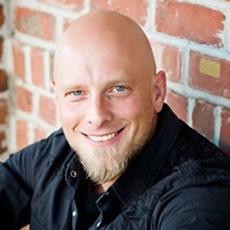

Last week was the best Evangelical Philosophical Society (EPS) conference I've ever experienced—and I haven't missed one since 2015! Moreover, immediately following EPS, Tyson James put on what I consider to be the best apologetics conference I've ever been a part of.
That's saying something!
What made this trip particularly special was that my wife, Tia, joined me for her first EPS experience. I thought she might be bored out of her mind listening to philosophers and theologians discuss the finer points of metaphysics.
Boy, was I wrong! One night she woke me up at 1 a.m. because she wanted to discuss the relationship between God and time. She may have caught the bug!

It was so much fun having her on this trip with me. Before discussing some of the philosophical and theological highlights of the week, however, I've got to give credit where credit is due.
The Real MVPs
Although I'm currently getting the opportunity to do quite a bit of speaking and receiving much attention, let me tell you something: Josh Klein and Thomas Moller are both future theological rock stars!
Josh is currently working on his PhD, and Thomas is finishing his MA and will immediately begin his PhD work. Both of these guys are already getting the attention of well-known scholars. I'm excited for the day when these two start receiving the notoriety their work deserves.
Moreover, these two guys—along with my wife—took care of me all week. They made sure I had everything I needed before my presentations, made sure I made it to the right rooms, made sure my PowerPoint presentations were set up, made sure the merchandise table was taken care of, made sure we had a rental car and a place to stay, and so much more.
They are the real MVPs!
Thank you, Thomas and Josh, for all the behind-the-scenes work you do for me while also focusing on your own academic studies. I'm excited about the future of FreeThinking Ministries and what God might accomplish through these two brilliant young men.
Now, let's get philosophical!
Anselm's Vindication?
My first presentation of the week was scheduled for 9 a.m. on the first day of EPS. Phil Kallberg and I coauthored a paper entitled:
“Anselm's Vindication? Ontological Arguments Show That the God of Philosophers Is the God of Theologians.”
We presented a shortened version of our paper to a packed room. It was encouraging to see so many people interested in ontological arguments for God's existence and their theological implications so early in the morning! (Click here to view our presentation.)

After our presentation, I had the opportunity to attend several fascinating talks from philosophers defending competing views of divine providence. As a Molinist, I was particularly interested in what they had to say.
And, as those who know me might expect, I had a few things to say in response!
Remembering Ben Arbour: A Calvinist Argument Molinists Should Embrace
One of the first presentations I attended was given by Elijah Hess, who was pushing back against an argument against Open Theism advanced by our late friend, Ben Arbour.
Ben was a Calvinist, and I'm a Molinist. The two of us would often debate Calvinism and Molinism, but we always remained respectful and friendly. I learned much from Ben, and I miss our theological interactions.
Despite our significant disagreements regarding divine sovereignty and human freedom, however, there was one thing upon which Ben and I agreed: Open Theism is false.
I remember attending a regional EPS conference in 2018 and having the opportunity to watch Ben and Elijah interact with one another. I was impressed by how these two brilliant philosophers could disagree about significant theological issues while maintaining genuine respect for one another.
Before asking Elijah my question during the Q&A, I shared that recollection with him from the crowd.
Moreover, I want to say something about both Elijah Hess and Alan Rhoda (who was also on the panel). Although these two philosophers frequently disagree with me and have challenged my arguments on multiple occasions, it is always such a joy to interact with them in person. In fact, this was my first opportunity to meet Alan in person!
Both of these gentlemen are consistently kind and respectful toward me and always make me feel appreciated. I've learned much from both of them, and I'm honored to count them as friends.
After realizing just how tall Alan Rhoda is, I started referring to these two gentlemen as the “Twin Towers of Open Theism.” Not simply because they're both tall, but because, in my estimation, they are two of the finest academic defenders of Open Theism in the world today.
Although I disagree with their conclusions, I have tremendous respect for both of them as philosophers and brothers in Christ.
Indeed, we can disagree about some rather significant theological issues without being disagreeable!

Who Are We to Know the Mind of God?
Before discussing my disagreements with Elijah, I've got to give him credit for what I thought was one of the best responses to a question during the entire EPS conference.
During the Q&A, a gentleman in the audience prefaced his comments by informing us that he was a PhD philosopher. He then proceeded to object to the entire panel—which consisted of philosophers defending competing theological views—by asking:
“Who are we to think that we can know the mind of God?!?”
Without missing a beat, Elijah responded with something along these lines:
“Well, the fact that you're at this conference seems to suggest that you believe we can know quite a bit about God based upon the revelation He has given us.”
The questioner replied: “Yeah, you're right.”
I laughed!
Well done, Elijah!
Indeed, there's a significant difference between claiming to know everything about God and claiming to know some things about God. Although we cannot exhaustively comprehend the mind of an infinite being, we can certainly possess knowledge of some theological truths—especially if God has gone out of His way to reveal them to us!
With that in mind, consider the following biblically based argument advanced by Ben Arbour and discussed in Elijah's presentation (much of the following is taken from Elijah’s handout).
Arbour's Theological Argument Against Open Theism
P = the date and time of Christ's return.
God knows P.
If Open Theism were true, God wouldn't know P.
So, Open Theism is false.
In defense of the first premise, Ben appealed to Matthew 24:36, where Jesus declares:
“But concerning that day and hour no one knows, not even the angels of heaven, nor the Son, but the Father only.”
According to Ben, Jesus makes it unequivocally clear that God the Father knows the date and time of Christ's return.
In defense of the second premise, Ben noted that Scripture indicates that Christ's Second Coming will not occur until the gospel has been proclaimed throughout the world (Matthew 24:14). Moreover, Christians are morally responsible for fulfilling the Great Commission because Jesus has commanded us to do so (Matthew 28:18–20). According to the typical open theist, however, if Christians are morally responsible for carrying out the Great Commission, then its fulfillment is contingent upon the choices and actions of humans who possess libertarian freedom. Since open theists deny that God possesses exhaustive definite foreknowledge of future libertarian free choices, it seems to follow that God cannot know precisely when the Great Commission will be fulfilled.
But if the timing of Christ's return is dependent upon the fulfillment of the Great Commission, how can God the Father know precisely when Christ will return?
Jesus says that the Father knows. Thus, we have a significant biblical problem for Open Theism.
Elijah offered some interesting objections to both premises of Ben's argument. Although I think Elijah might have demonstrated why Ben would personally be uncomfortable with some of the implications of his argument, I think Ben's argument is a great one for the Molinist to embrace.
Settled, Fixed, Known, or Determined?
One of the things I've been complaining about for quite some time when interacting with open theists is their frequent use of words like settled and fixed when discussing future events.
These words are often employed without sufficient philosophical precision.
What exactly does it mean to say that a future event is settled? What does it mean to say that a future event is fixed? Does it mean that the event is causally determined to occur?
Or does it simply mean that the truth regarding the future event is known by God?
These are radically different concepts!
I asked Alan Rhoda about this very distinction. When I asked him whether he meant determined or known, he appealed to something along the lines of the mathematical truth that 2 + 2 = 4—a truth that God does not determine.
Unfortunately, I did not have an opportunity to follow up on his response, but there are a couple of important distinctions worth making here.
First, mathematical truths are necessary truths. That is to say, 2 + 2 = 4 in every possible world. However, the proposition that I freely choose to drink coffee tomorrow morning is a contingent truth if it is true at all. It can be true in one possible world and false in another.
Second, as I explain in my book, Human Freedom, Divine Knowledge, and Mere Molinism, the mathematical truth that 2 + 2 = 4 does not causally determine two apples placed alongside another two apples to constitute four apples. Mathematical truths do not exert causal force upon apples or anything else in the physical world!
Similarly, the truth of a proposition describing my future free choice does not causally determine me to make that choice. Nor does God's knowledge of that truth causally determine my choice.
If God causally determines all of my thoughts and actions, then we have a significant problem because humans do not possess libertarian freedom. However, if God merely knows how I will freely think and act, then the alleged causal problem melts away.
Why? Because God's knowledge of my choice does not causally determine my choice. Knowing that something will occur is not the same thing as causing it to occur.
We must be careful not to conflate truth, certainty, metaphysical necessity, and causal determination.
Words matter!
Did Jesus Know When He Would Return?
In his critique of Ben's first premise, Elijah suggested that Ben's interpretation of Matthew 24:36 generates a problem for orthodox Christology. After all, if Jesus is fully divine and omniscience is an essential attribute of divinity, how can Jesus not know the date and time of His own return?
My initial reaction was something along the lines of, “So what?”
Now, don't misunderstand me. I affirm orthodox Christianity. But if a particular understanding of orthodox Christianity entails a logical contradiction, then we've got a logical problem on our hands. Simply appealing to orthodoxy does nothing to resolve a logical contradiction.
With that said, I don't think orthodox Christianity necessarily faces this problem. As I noted during the Q&A, I consider the Christological model advanced by J. P. Moreland and William Lane Craig in Philosophical Foundations for a Christian Worldview to be compatible with orthodox Christianity. On their model, the incarnate Christ retains His essential divine attribute of omniscience. However, much of His divine knowledge resides deep within His subconscious and is not immediately accessible to His ordinary human consciousness.
This allows Jesus to genuinely experience what it's like to be a baby in a manger. It allows Him to experience what it's like to learn and grow in wisdom and stature (Luke 2:52). It allows Him to genuinely experience the anguish of praying in the Garden of Gethsemane, asking the Father if there might be another way to save humanity. Thus, in a very real sense, Jesus could truthfully say that He did not know when He would return. That is to say, Jesus was not consciously aware of the date and time of His return when He made that statement, even though He retained His essential divine attribute of omniscience deep within His subconscious.
Moreover, this does not entail that Jesus never had conscious access to any of His divine knowledge. Nor does it entail that God the Father could not reveal specific truths to Him during His earthly ministry.
Elijah also offered an alternative interpretation of Matthew 24:36 according to which the Father alone possesses the authority to reveal the date and time of Christ's return. On this interpretation, the passage need not entail that the date and time are already known by God. Although that's an interesting interpretive possibility, I see no compelling Christological reason to abandon the more straightforward propositional reading of the passage.
With all that in mind, it seems to me that Ben's first premise remains quite defensible.
Open Theism or Calvinism?
In his critique of Ben's second premise, Elijah made an interesting move.
He pointed out that an open theist need not affirm an incompatibilist account of human freedom. That is to say, an open theist could affirm compatibilism and maintain that God causally determines certain human choices without eliminating human moral responsibility.
Accordingly, although some future events might be genuinely indeterminate, God could causally determine all of the events necessary to ensure that the Great Commission is fulfilled at a particular time. Thus, God could know precisely when Christ will return.
This is where the discussion gets particularly interesting. In the first appendix of the second edition of my book, Human Freedom, Divine Knowledge, and Mere Molinism, published this past summer, entitled “Compatibilism: What Do You Mean by That?,” I discuss the importance of distinguishing between two different theses often associated with compatibilism:
Some kinds of freedom are compatible with causal determinism.
Moral desert and/or epistemic responsibility are compatible with causal determinism.
Following libertarian philosopher Robert Kane, I grant the first thesis but adamantly reject the second. Indeed, I argue that the kind of freedom required to ground moral and rational desert responsibility is libertarian freedom. Thus, simply appealing to “compatibilism” does not get the open theist off the metaphysical hook. As Greg Koukl has taught us, we must first ask: What do you mean by that?
Moreover, whenever someone informs me that he is a compatibilist, I want to ask another question:
Are you a determinist?
And if you're not an exhaustive divine determinist (whcih the open theist isn't), do you nevertheless maintain that God causally determines the specific human choices relevant to the fulfillment of the prophecy under consideration?
After all, affirming compatibilism (that either some kind of freedom and/or moral responsibility is compatible with determinism) is not the same thing as affirming determinism. Compatibilism is a thesis regarding what is compatible with determinism—not a thesis regarding whether determinism is actually true.
Interestingly enough, one of the primary reasons many open theists reject Calvinism is precisely because they reject exhaustive divine determinism (EDD). Thus, simply affirming that moral responsibility could be compatible with determinism while simultaneously rejecting exhaustive divine determinism does very little to advance the open theist's case against Ben's second premise. To do the explanatory work required by Elijah's proposed objection, the open theist must go beyond merely affirming the compatibility thesis. He must also maintain that God causally determines the relevant human choices—or otherwise guarantees that the Great Commission will be fulfilled at a particular time.
If the open theist takes the deterministic route, however, he must now defend the very kind of compatibilism I argue against in my book: the compatibility of moral desert responsibility—along with epistemic responsibility—with divine causal determinism.
So, in an attempt to defend Open Theism against a Calvinist's argument, the open theist is appealing to one of the most controversial philosophical theses employed by Calvinists to defend their view!
I find that rather ironic.
If God causally determines Christians to fulfill the Great Commission, then, given my case in Appendix I of my book, Christians are not morally deserving of praise for fulfilling it. Conversely, if God causally determines Christians to neglect the Great Commission, they are not morally deserving of blame for failing to fulfill it.
As I argue in my book:
No possible world exists where God determines me to do X, but I really should have (or ought to have) done other than X.
To be fair, Elijah is correct to note that an open theist need not affirm that humans possess libertarian freedom on every occasion. After all, neither do I!
Moreover, I grant that if Elijah's proposed model is coherent, then Ben's second premise, as currently formulated, might be too broad. Nevertheless, demonstrating that an open theist can reject a premise is not the same thing as demonstrating that he can do so without incurring significant philosophical and theological costs. Indeed, I contend that if the open theist seeks to preserve moral desert responsibility while appealing to divine causal determination of morally significant actions, then he has inherited one of the same philosophical and theological problems facing the Calvinist.
Of course, I recognize that selectively determining some human choices is not the same thing as exhaustively determining all human choices. Nevertheless, one of the primary attractions of Open Theism is supposed to be its ability to avoid many of the theological problems associated with divine determinism (which is why I have said that Open Theism is better than Calvinism). The more an open theist appeals to divine causal determination to explain biblical prophecy, however, the more theological baggage associated with Calvinistic determinism threatens to accompany the view.
How far is the open theist willing to take it?
At some point, I am inclined to ask: Why not just be a Calvinist?
Consider a couple of examples.
The Prophecy of Cyrus
In Isaiah 44:28–45:1, God specifically identifies Cyrus by name and describes what he will accomplish.
According to the traditional dating of Isaiah, this prophecy was made roughly two centuries before its fulfillment and well over a century before Cyrus was even born! Think about all the contingent free choices and actions that had to occur for Cyrus to come into existence in the first place.
His parents had to meet and choose to "get together." Both sets of grandparents had to meet and "get together." The same is true of his great-grandparents and so on. Moreover, consider the myriad of other contingent factors that had to converge for this particular individual to come into existence and eventually become a powerful ruler. Are we supposed to believe that God causally determined all of these things to occur simply to ensure the fulfillment of this prophecy?
If so, why not just be a Calvinist?
Moreover, the prophecy concerned the liberation of the Jewish people from captivity. Think about all the sin and evil committed by thousands of people during the generations leading up to this event. A multitude of (free?) sinful choices contributed to the historical circumstances in which Cyrus would eventually find himself.
Are we supposed to believe that God causally determined all of these sinful choices to ensure that His prophecy would come to pass?
If so, why not just be a Calvinist?
The Molinist, on the other hand, can affirm that God knew how all of these individuals would freely choose in various circumstances without affirming that God causally determined any of their sinful choices.
A Specific Three-Time-Denying Nature?
Consider Jesus' prophecy regarding Peter's denial of Christ.
Jesus didn't merely predict that Peter would eventually succumb to pressure and deny Him at some point in the future. Jesus predicted that Peter would deny Him three times before the rooster crowed (Matthew 26:34).
That's a remarkably specific prophecy!
Some open theists have suggested that Jesus knew Peter's nature so well that He knew Peter had a Christ-denying nature that night.
My response: "A specific three-time-denying nature?"
Moreover, Peter wasn't the only free agent involved in the fulfillment of this prophecy. Consider all the people roaming around Jerusalem that night and the various individuals who confronted Peter. Are we supposed to believe that God causally determined each of these individuals to confront Peter precisely as they did?
Did God also causally determine Peter to sin by denying Christ three times?
If so, why not just be a Calvinist?
The Molinist possesses a much better explanation of these biblical data. God knows what libertarian free creatures would freely choose to do in various circumstances. Accordingly, God can possess infallible knowledge of what will happen in the actual world without causally determining all the thoughts and actions of the people who inhabit it.
Bottom line: I actually think Open Theism is a philosophically attractive view. Indeed, if it weren't for Scripture, I'd likely be an open theist.
Interestingly enough, during the panel discussion, either Chad McIntosh or Jim Spiegel (both of whom were also on the panel and neither of whom is an open theist) asked Elijah what he thought was the greatest challenge facing the open theist. If memory serves, Elijah acknowledged that certain passages of Scripture were a source of concern. He noted that he tries to remain biblical but acknowledged that this can sometimes be a challenge.
I sincerely appreciate Elijah's intellectual honesty and his desire to remain faithful to Scripture. Indeed, it seems that what Elijah recognizes as a significant challenge to Open Theism is precisely what prevents me from embracing the view.
As philosophically attractive as I find Open Theism, I find Molinism even more attractive precisely because it possesses both philosophical and biblical explanatory power (see Chapter 12 and Chapter 14 of Human Freedom, Divine Knowledge, and Mere Molinism).
The Problem of Evil for Open Theism
Open Theism is often considered attractive because of its purported ability to deal with the problem of evil. After all, if God does not possess exhaustive definite foreknowledge of future libertarian free choices, then God might not know that certain horrendous evils will occur.
But how much does this really help?
Consider the Holocaust.
Suppose, for the sake of argument, that God did not know in advance that Hitler and the Nazis would freely choose to commit genocide against the Jewish people.
Nevertheless, God would certainly have been aware of what was happening once the persecution and atrocities were underway. Even if God did not know beforehand what the Nazis would freely choose to do, He knew what they were doing as they were doing it and as these evils continued over the course of time.
If I had the power to stop these atrocities once I became aware of what was happening, I would have done so. Wouldn't you?
So, the open theist still has to explain why a perfectly good, loving, and powerful God did not intervene to prevent the continuation of these horrendous evils. Simply denying that God knew beforehand that these evils would occur does not explain why God permitted them to continue once they became known to Him.
The Molinist, however, possesses explanatory resources that are not available to the open theist in the same way. As I often explain, like Doctor Strange in The Avengers, God has the endgame in mind!
God possesses exhaustive middle knowledge of the counterfactuals of creaturely freedom relevant to His decisions to intervene or refrain from intervening. Accordingly, like Doctor Strange in The Avengers movies, God knows the ultimate consequences associated with the actualization of every feasible world.
For all we know, God has actualized the best—or one of the best—feasible freedom-permitting worlds in which evil is ultimately defeated and every person who is not transworld damned freely embraces Christ and eternally perseveres.
By transworld damned, I am referring to a person for whom there is no feasible world in which that person both freely embraces Christ and eternally perseveres. If the actualization of such a world requires the temporary permission of certain horrendous evils, then a perfectly good, loving, powerful, and intelligent God would be morally justified in permitting them. In fact, I contend that if such feasible world exists, then a maximally great being would actualize it no matter how much finite evil and suffering is entailed.
This demonstrates how the middle knowledge view provides the philosophical resources to explain why God might permit horrendous evils that He possesses the power to prevent.
Although I believe these are significant problems for Open Theism, I still consider Open Theism preferable in several respects to Calvinistic exhaustive divine determinism (EDD).
Speaking of which . . .
God as Author—or a Deity of Deception?
I also attended a presentation given by Garrett Pendergraft entitled: “God as Author: A (Relatively) Radical Solution to the Problem of Theological Determinism.”
Garrett is an exhaustive divine determinist who recognizes two significant problems facing his view. The first is what he calls the agency problem. How can theological determinism be compatible with genuine creaturely agency? The second is what he calls the complicity problem. How can theological determinism avoid making God complicit in creaturely wrongdoing?
Garrett offered some interesting philosophical moves in an attempt to resolve these problems. His proposed solution to the complicity problem appeals to the distinction between primary and secondary causation, the analogy of an author writing a fictional narrative, and even David Chalmers' work on virtual realism.
During the Q&A, philosopher Dr. Matt Flummer raised an interesting objection to the author analogy by noting that we might rightly blame an author for writing a bad story. I immediately jumped on that opportunity and informed everyone that I blame Disney for wrecking Star Wars!
The entire room of philosophers laughed and seemed to agree!
All joking aside, Matt raised a significant philosophical point: appealing to the author analogy does not necessarily absolve the author of responsibility for the contents of the story. Indeed, we often hold authors responsible for the very things they determine their characters to think, say, and do.
Consider the analogy of George Lucas and his Star Wars saga. Although Darth Vader commits evil acts because of his own desires within the narrative, George Lucas is ultimately responsible for crafting the narrative in which Darth Vader possesses those desires and acts upon them.
Nevertheless, we don't typically consider Lucas morally guilty of the crimes committed by Darth Vader because neither Darth Vader nor his victims actually exist. We don't accuse George Lucas of murdering younglings simply because he wrote a fictional story in which Anakin Skywalker does precisely that.
Why? Because it's fiction!
These things never actually happened. No children actually suffered or died as a result of Lucas writing that scene.
On exhaustive divine determinism (EDD), however, we're not talking about a fictional author determining fictional characters to commit fictional atrocities against fictional victims. We're talking about a real God causally determining real people to commit real atrocities against real victims who experience real suffering.
That's a rather significant disanalogy!
The proposed analogy is supposed to help us understand how God might determine all things without being morally blameworthy for the sinful actions of His creatures. Of course, unlike fictional characters, human beings are real persons in the actual world who experience real (not fictional) suffering. Garrett seems to recognize that his account needs to explain how creaturely agency and causal interactions can be genuinely real despite their dependence upon a higher level of causation.
That's where his appeal to virtual realism comes into play.
Although I have significant objections to this approach, for now I'm willing to grant Garrett's proposed solution to the complicity problem for the sake of argument. Why? Because even if Garrett successfully resolves the agency problem and the complicity problem, there is yet another problem facing the exhaustive divine determinist:
The epistemic problem!
The Transfer of Trust Principle
During his presentation, Garrett discussed Peter van Inwagen's Consequence Argument and the transfer of blame principle.
When I had my opportunity to interact with Garrett during the Q&A, I asked him if he had ever considered what I call the transfer of trust principle. I then proceeded to explain the Deity of Deception Argument that J. P. Moreland and I have been advancing for over four years.
Consider the implications of exhaustive divine determinism (EDD).
If God exhaustively determines all things, then God determines all of our thoughts and beliefs. Moreover, God determines all of our deliberations and evaluative judgments regarding our thoughts and beliefs.
Indeed, on EDD, God determines every single theological belief that every single theologian has ever affirmed.
Now, unless there's some “Super Pope” walking around with a perfect set of theological beliefs (which everyone at the EPS would reject), it follows that God determines every theologian—including every Christian theologian—to affirm false theological beliefs.
Think about that!
On this view, God determines Calvinists—and all of His devoted followers (and everyone else)—to affirm false theological beliefs. God determines Molinists to affirm false theological beliefs. God determines open theists to affirm false theological beliefs. God even determines those who reject His existence to affirm false theological beliefs. And when any of these individuals carefully evaluates their theological beliefs in an attempt to determine which of them are true and which of them are false, God determines those evaluative judgments as well.
Thus, on EDD, the very cognitive processes by which we attempt to distinguish theological truth from theological error are exhaustively determined by the same being who determines all of us to affirm theological error.
How, then, are we in an epistemic position to rationally trust our theological beliefs?
Unfortunately, Garrett was unfamiliar with this argument and initially responded by suggesting that God might have morally sufficient reasons for determining people to affirm false theological beliefs.
I stopped him and pointed out that this was not my objection.
For the sake of argument, I'm willing to grant that God has morally sufficient reasons for deceiving every single human being who has ever existed.
So what? That does absolutely nothing to resolve the epistemic problem facing humanity!
Indeed, as I’ve pointed out elsewhere: a moral justification for deception is not an epistemic justification for trusting the deceiver.
My objection is not that God cannot be perfectly good if EDD is true. Rather, I'm arguing that if EDD is true, then humanity faces an epistemic meltdown regarding theology. Even if a deity of deception has morally sufficient reasons for deceiving all of humanity, how can humanity rationally distinguish the theological truths this deity determines us to affirm from the theological falsehoods this same deity determines us to affirm?
The problem is not simply that humans possess false theological beliefs. The Molinist can affirm that much! The problem is that, on EDD, the very cognitive processes by which we attempt to distinguish theological truth from theological error are exhaustively determined by the same being who intentionally determines us to affirm theological error in the first place.
Where is our rational basis for trusting these cognitive processes when it comes to theology?
Moreover, one cannot simply appeal to Scripture to resolve this problem. Why? Because if a deity of deception inspired Scripture, then the trustworthiness of Scripture is already in question. Appealing to Scripture's claims regarding God's trustworthiness to establish the trustworthiness of the deity who inspired Scripture begs the question against the epistemic objection.
If the Deity of Deception Argument succeeds, we are not in an epistemic position to gain theological knowledge from Scripture.
Moreover, we certainly don't have assurance of salvation. As I asked James White during our debate: “If a deity of deception assures you of salvation, do you really have assurance of salvation?”
That's a rhetorical question.
Garrett acknowledged that he would have to think about this argument further. I hope he gives the argument serious consideration.
This is one of the reasons I consider exhaustive divine determinism (EDD) to be a far more problematic theological view than Open Theism. Although I believe Open Theism faces significant biblical and theological problems, EDD threatens to undermine our epistemic position to gain any theological knowledge whatsoever.
Indeed, if the Deity of Deception Argument succeeds, the exhaustive divine determinist cannot rationally claim to know that exhaustive divine determinism is true.
That's the epitome of a self-defeating view!
Middle Knowledge by Another Name?
I also attended a presentation given by a bright young PhD student named Ethan Butt, who was arguing that the simple foreknowledge view of divine providence is preferable to the middle knowledge view.
I found his presentation particularly interesting because it was advertised that he would be interacting with a journal article against Molinism written by Rubio and Climenhaga.
In fact, the final appendix of the second edition of my book, Human Freedom, Divine Knowledge, and Mere Molinism, is a lengthy response to their objection to Molinism. I provide four reasons why I believe their objection fails. Thus, I was particularly interested in what Ethan had to say.
As I listened to his presentation, however, it seemed to me that his proposed alternative to middle knowledge—a simple foreknowledge view—actually supported the middle knowledge view! When I had my opportunity to interact with Ethan during the Q&A, our conversation went something like this:
Me: Does this universe exist necessarily?
Ethan: No.
Me: Could God have refrained from creating this universe?
Ethan: Yes.
Me: Did God know how Satan would freely choose if He were to create this world, even if God were to refrain from creating it?
Ethan: Yes!
At this point, there was an audible gasp from the audience. It seemed that many of those in attendance immediately recognized the implications of Ethan's answer.
Me: That's middle knowledge!
Ethan: That is not middle knowledge!
Well, what exactly is it? It's certainly more than simple foreknowledge of the actual future. After all, according to Ethan's answers, God possesses knowledge of how Satan would freely choose if God were to create this world, even while God retains the freedom and ability to refrain from creating it.
This is counterfactual knowledge of creaturely freedom.
Moreover, this is the very kind of knowledge typically rejected by open theists.
Now, I'm well aware that, technically speaking, Molinists describe middle knowledge as God's knowledge of counterfactuals of creaturely freedom logically prior to His creative decree. Nevertheless, if one affirms that God knows how Satan would freely choose if God were to create him, even while God retains the freedom to refrain from creating him, then one has affirmed the kind of counterfactual knowledge that makes Molinism so philosophically and theologically attractive.
Perhaps Ethan's model introduces temporal moments between some initial divine decree and the act of creation itself. If so, we would need to clarify precisely what God has decreed and how the relevant counterfactual truths relate to His will. Nevertheless, if this counterfactual knowledge is independent of God's will and available to God while He retains the freedom to refrain from actualizing the relevant circumstances, then it seems capable of performing the very explanatory work that middle knowledge provides.
Moreover, the possibility of temporal succession prior to physical creation fits quite nicely with the understanding of divine temporality and middle knowledge advanced by Ryan Mullins—as we shall discuss shortly.
I find it rather ironic that an entire presentation was devoted to explaining why the middle knowledge view is unnecessary, only for the proposed alternative to sound remarkably like a version of the middle knowledge view I’ve advanced in the literature!
Whatever Ethan wishes to call this kind of divine knowledge, it sounds remarkably Molinistic to me! A rose by any other name smells just as sweet.
Bottom line: I had an absolute blast attending presentations from philosophers defending Open Theism, exhaustive divine determinism, and simple foreknowledge—and interacting with each of them from the audience.
The more I interact with these competing models of divine providence, the more convinced I become that Mere Molinism offers the best explanation of all the relevant biblical and philosophical data. Nevertheless, I appreciate these scholars and their willingness to defend their views in an environment where their arguments can be challenged. I hope they continue to challenge mine as well!
That's one of the reasons I love EPS.
Iron sharpens iron (Proverbs 27:17).
Craig vs. Mullins: Two Philosophers, One Metaphysical Picture?
Although there were many other fascinating presentations at EPS, I want to discuss one more highlight before transitioning from the academy to the Church.
I consider both William Lane Craig and Ryan Mullins to be good friends. I've learned so much from each of these brilliant Christian philosophers. In fact, I recently had Ryan on the FreeThinking Ministries podcast to discuss his disagreements with Dr. Craig regarding the relationship between God and time. Craig subsequently responded on his own podcast and had some very kind words to say about me.
Thus, I was particularly excited to see these two philosophical heavyweights interact in person.

Dr. Craig is well known for his claim that “God is timeless sans creation.” Ryan Mullins, on the other hand, maintains that time is an attribute of God. Since God has always existed, so has time.
I first began wrestling seriously with these issues in 2012 when I had Dr. Craig as a lecturing professor at Biola University. We actually met for class at his church in Atlanta.
In fact, the very first question I ever asked Dr. Craig was this:
“What is a moment?”
As I recall, Craig's answer appealed to a measurable duration of time. Whatever a moment is, Craig argued that there cannot be an actually infinite past succession of such moments if the present moment has been reached.
As part of that course, I was required to read Craig's God, Time, and Eternity. It blew my mind! Through his words, Dr. Craig painted a big, beautiful metaphysical picture in my mind's eye. I've employed much of his philosophical terminology ever since—even in my published academic work.
However, Ryan Mullins has also significantly influenced my thinking in recent years. I've increasingly found myself attracted to some of the philosophical language Ryan employs to describe the relationship between God and time.
But here's what I've been wondering:
Are Craig and Mullins looking at fundamentally different metaphysical pictures, or are they looking at the same picture and disagreeing about the philosophically precise language we ought to use to describe it?
When I finally got my opportunity to raise a question from the microphone, I explained that Dr. Craig had painted a beautiful metaphysical picture for me years ago. I suggested that both Craig and Mullins might affirm this same picture, even though they disagree about the language used to describe various aspects of it.
I asked Dr. Craig if he thought that might be the case.
His response?
An emphatic NO!
Interestingly enough, Ryan agreed with Craig on that point!
I immediately returned to my seat, slightly defeated, pulled out my notebook, and began drawing the metaphysical picture I had in mind.
Here's the actual sketch I drew during the discussion:

As soon as the session concluded, I got in line to speak with Dr. Craig. When I finally got my opportunity, I showed him my sketch.
He liked it. He affirmed it. However, he expressed doubt that Ryan would affirm it and encouraged me to show it to him.
Challenge accepted!
Ryan and I subsequently went to dinner together, where we had an opportunity to discuss these matters in greater detail. I showed him the same metaphysical picture that Craig had just affirmed.
Ryan told me that what I had sketched was perfectly compatible with his view!
So, do I not stand vindicated?
Painting the Metaphysical Picture
Since returning home from Denver, I've taken my original sketch and used AI to develop a more aesthetically pleasing illustration to help others see what I see.
The first panel depicts the general metaphysical picture without employing controversial temporal terminology. The second and third panels illustrate how Craig and Mullins, respectively, describe the metaphysical landscape on their standard accounts.
Pay particular attention to both the similarities and the differences.

Consider the changeless state on the left side of the first illustration. The triune God exists. God is omnipotent and omniscient. Thus, as I argue in Mere Molinism, if God is both omnipotent and omniscient in this state of affairs, then God possesses both natural knowledge and middle knowledge.
God knows everything that could happen and everything that would happen if He were to actualize various circumstances. God then freely decrees to actualize a particular world. With the divine decree comes God's free knowledge—His knowledge of what will actually happen in the world He has chosen to actualize.
On the right side of the illustration, we have a dynamic state of affairs with metric moments involving successive changes.
Now, how should we describe the changeless state on the left side of the illustration?
Should we say that God exists in a timeless state, or should we say that God exists in a changeless first moment of time?
Much depends upon what we mean by the word moment. If a moment is understood in terms of a measurable duration associated with change, then it makes sense to refrain from describing the changeless state on the left side of the illustration in terms of metric temporal moments.
But if a moment can be understood as a state of affairs such that subsequent states of affairs could be different, then it makes sense to describe the changeless state on the left side of the illustration as the first moment of time.
Notice that on either description, we're looking at a changeless state of affairs followed by a dynamic state of affairs.
Craig's Description
As depicted in the second panel, Craig typically describes the changeless state on the left side of the illustration as a timeless state. God exists timelessly sans creation and enters into a temporal relationship with His creation when the universe comes into existence.
On Craig's standard account, metric temporal succession begins with creation.
Mullins' Description
As depicted in the third panel, Mullins, on the other hand, describes the changeless state on the left side of the illustration as the first moment of time.
On this account, time does not come into existence with the physical universe. Rather, time is an attribute of God.
Nevertheless, God can exist in a changeless first moment of time without an infinite succession of prior changes. Dynamic temporal succession can begin with the divine decree, even prior to the creation of the physical universe. Interestingly enough, although their standard accounts differ regarding when dynamic temporal succession begins, both Craig and Mullins appear willing to affirm the possibility of God initiating temporal succession prior to physical creation.
Consider the following hypothetical scenario Dr. Craig offers. Suppose God, prior to creating the physical universe, freely chose to count down: “Three . . . two . . . one . . . Let there be light!”
In this scenario, there would be a succession of changes in God's mental life prior to the creation of the physical universe. Nothing about the creation of the physical universe itself seems necessary for God to freely initiate such a succession of changes.
Accordingly, although Craig's standard account is depicted without metric moments between the divine decree and the Big Bang, the possibility of such moments does not appear to be something he must reject.
This is particularly relevant to our previous discussion regarding Ethan Butt's proposed alternative to middle knowledge. If God can experience temporal succession prior to physical creation, then there is room to explore how divine counterfactual knowledge might inform creative decisions during that succession.
The important Molinist question concerns the logical relationship between God's counterfactual knowledge and His decisions regarding what to actualize—not merely the temporal relationship between God's knowledge and the Big Bang.
Words Matter
Now, I'm not suggesting that the disagreement between Craig and Mullins is merely about semantics. This is an important philosophical conversation!
We ought to strive to employ philosophically precise language that accurately describes metaphysical reality without generating unnecessary confusion or apparent logical contradictions. Moreover, the fact that both philosophers can affirm the same metaphysical picture I've sketched does not entail that every aspect of their respective philosophical models is identical.
Nevertheless, I suspect that much of the disagreement between Craig and Mullins is not about the metaphysical landscape itself, but about the philosophically precise language we ought to employ when describing that landscape.
Perhaps these two brilliant philosophers agree on far more than either initially realized.
Although I've employed Craig's terminology for well over a decade, I increasingly appreciate the precision of the language Mullins employs. The beautiful metaphysical picture that Dr. Craig painted for me in 2012, however, remains intact.
Interestingly enough, this was a recurring theme throughout my interactions at EPS this year.
When discussing Open Theism with Elijah Hess, it was important to distinguish between an event merely being known and an event being causally determined.
When discussing exhaustive divine determinism with Garrett Pendergraft, it was important to distinguish between a moral justification for deception and an epistemic justification for trusting the deceiver.
When discussing simple foreknowledge with Ethan Butt, it was important to distinguish between knowledge of the actual future and counterfactual knowledge of creaturely freedom.
And when discussing God and time with Craig and Mullins, it was important to distinguish the metaphysical landscape itself from the philosophical terminology employed to describe it.
Sometimes philosophical precision exposes profound problems with competing theological models. Other times, philosophical precision helps us recognize that we agree on far more than we initially realized.
Either way, good philosophy serves good theology, and good theology serves the Church.
From the Academy to the Church
As I noted above, this was the best EPS conference I've ever experienced—and I haven't missed one since 2015!
Before wrapping up my discussion of EPS, I also want to give a shout-out to several other scholars I had the pleasure of listening to throughout the conference: Mike Licona, Chad McIntosh, Chris Stockman, Robin Collins, Eli Haitov, and Kirk MacGregor.
Although I don't have the space to discuss all of their presentations in this article, each contributed to making this year's EPS experience so memorable.
One of the things I love most about EPS is the opportunity to learn from brilliant Christian scholars who are committed to loving God with all of their minds (Matthew 22:37). Even when we disagree with one another, these interactions challenge us to think more deeply, carefully, and clearly about God and ultimate reality.
But my week in Denver wasn't over yet.
Immediately following EPS, I had the privilege of participating in the Sound Faith Apologetics Conference organized by Tyson James.
As amazing as my experience at EPS was, Tyson managed to put together what I consider to be the best apologetics conference I've ever been a part of!

I had the opportunity to deliver two presentations at Sound Faith. The first focused on how the middle knowledge view of divine providence provides the resources to defeat what seems to be ALL the various problems of evil (in the words of the late Doug Geivett, “that which ought not be”).
The second, entitled “Putting the Reason in Reasonable Faith,” was based upon the chapter I'm contributing to a forthcoming Festschrift honoring William Lane Craig.
Moreover, some fascinating questions raised during my time in Denver have already inspired me to begin working on another academic journal article that I plan to submit to the EPS in Washington D.C. next year.
I'll discuss all of these highlights—and much more—in Part Two.
Finally, I want to thank those of you who financially support FreeThinking Ministries. Your generosity allows us to engage in academic scholarship, interact with some of the world's leading Christian philosophers and theologians, equip the Church, and help cultivate the next generation of Christian scholars.
Jesus commands us to love God with all of our minds (Matthew 22:37). That's what we're striving to do at FreeThinking Ministries, and we're encouraging others to do the same.
Thank you for making this work possible!
Stay tuned for Part Two focusing on the Sound Faith apologeitcs conference.
Stay reasonable (Isaiah 1:18),
Tim Stratton


Comments