
One Year Later: Keep Charlie Kirk’s Fire Burning
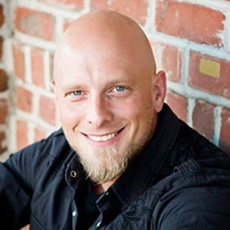

One year ago today, Charlie Kirk was assassinated.
It still feels strange to type those words. I'll never forget where I was when I heard the news. I was sitting in the dentist's chair getting a cavity filled by my dentist—who, years ago, was a teenager in my youth group. While I waited for the numbing medication to set in, I pulled out my phone and saw Graham Allen asking for prayers for Charlie. My heart sank.
I immediately googled “Charlie Kirk.” At first, nothing came up. I refreshed the page until finally a lone report appeared reporting that Charlie had been shot in Utah. A few minutes later, my dentist walked back into the room. His face was pale. He had seen the video. He showed it to me.
“Oh God!”
Then we just sat there. We cried. We were angry. We were confused. And right there in the exam room, he prayed for Charlie and his family. When he finished, I looked at him—my mouth still numb—and asked, “Do you feel like working on my teeth?”
He shook his head. “Not really.”
“I don't feel like it either.”
I hugged him and left. When I got into my Jeep, I screamed at the top of my lungs. Deep down, I knew Charlie wasn't going to survive.
The next morning, while the shock and grief was still fresh, I wrote a blog titled “Charlie Kirk's Message Lives On.” I believed it then. One year later, I believe it even more.
They Did Not Silence Charlie Kirk
I never met Charlie personally, but I felt like I knew him. I had watched him for years, and I knew some of his friends. In fact, Frank Turek has been a mentor to both Charlie and me. I watched Charlie walk onto college campuses—often surrounded by people who despised virtually everything he stood for—and invite them to challenge him.
That was Charlie. He fought with ideas. He made arguments. He gave reasons. He invited disagreement.
“If you disagree with me, come to the front of the line and let's talk this out.”
Think about the horrible irony of how Charlie's life ended. A man who spent his adult life inviting his opponents to defeat his arguments was ultimately answered not with a better argument, but with a bullet.
As a Christian philosopher and the founder of FreeThinking Ministries, that aspect of Charlie's life has always resonated deeply with me. Rational persuasion assumes that other human beings are persons capable of considering reasons, weighing evidence, recognizing truth, and changing their minds. Violence abandons that project. Charlie said, in effect, “Give me your argument.” His murderer responded with a rifle.
But it didn't work.
One year later, Charlie has not been silenced. Turning Point USA has continued expanding its presence on American campuses. Reporting this week indicates substantial growth in new high-school and college chapters during the year following Charlie's assassination.
The bullet killed the man. It did not kill his message.
Something Happened the Following Sunday
Charlie's political influence, however, is not what struck me most in the days following his death. Something happened in churches across America. People showed up.
The phenomenon was real enough to attract national attention. College ministries reported larger-than-normal crowds and unfamiliar faces. Newman Ministry, which works with Catholic ministries on hundreds of campuses, reported increases at Masses after Charlie's assassination, with some schools estimating attendance increases around 15 percent. Churches in several states reported similar experiences. People who had not attended church in years publicly described returning because Charlie's murder had forced them to think about faith, evil, mortality, family, and God.
I noticed something remarkably similar after 9/11 back in 2001. Churches suddenly filled with people searching for answers. The assassination of one man seemed to awaken many of the same existential questions about God, evil, death, and eternity that swept across America after the Twin Towers fell—which, incredibly, will be twenty-five years ago tomorrow.
I heard similar stories myself. I spoke with Christians whose churches had unfamiliar faces that Sunday—people apparently looking for answers after watching a young husband and father murdered before their eyes. And yet some of those congregants told me something that bothered me: their pastors barely mentioned Charlie that day.
Perhaps they were afraid of appearing “political.” Perhaps they didn't know what to say. At most, some offered something along the lines of, “Well, it's been a hard week for some of us . . .” And then they moved on.
I understand the desire not to turn the pulpit into a campaign rally. I honestly don't want that either. But I remember thinking: Do we recognize the moment we've been given?
People who hadn't been inside a church in years were walking through the doors looking for answers. What is evil? Why does God allow this? What happens when we die? Where can we find hope? Those aren't Republican questions, and they aren't Democratic questions. Those are worldview questions. Those are gospel questions.
At my church, City Light Kearney, Pastor Tyler Wilterding recognized the moment. He didn't merely mention Charlie. He recognized Charlie Kirk as a Christian martyr.
A few days later, I wrote another article making precisely that case: “Was Charlie Kirk a Christian Martyr?” My answer was yes.
Charlie wasn't merely a Christian who happened to be involved in politics. His political convictions were downstream from his theological convictions (just as mine are). He spoke openly about Jesus Christ. He defended a Christian understanding of truth, human dignity, morality, marriage, family, and human flourishing. Moments before he was murdered, Charlie had been doing what he had done so many times before: publicly defending what he believed.
For a moment in those days following his assassination, it seemed as though we might be watching the first sparks of a genuine Christian revival in America. A fire had been lit.
Then Came the Noise
And then something happened. The conspiracy theories began. The accusations began. The infighting began. Instead of asking how we could continue what Charlie had started, enormous amounts of attention became consumed with suspicions about who was really responsible for his death, who had betrayed whom, and which faction of the conservative coalition represented the real movement.
Candace Owens became one of the most prominent promoters of conspiracy theories surrounding Charlie's assassination, including allegations involving Turning Point officials, Israel, and even Charlie's widow, Erika. Those claims have produced bitter conflict among people who once stood together in the movement Charlie helped build.
Meanwhile, court proceedings have produced substantial evidence concerning the prosecution's case against the man charged with Charlie's murder.
Watching all of this has been deeply frustrating because Charlie was a coalition builder. That may have been one of his greatest political gifts.
Charlie understood something increasingly forgotten in American politics: you don't have to agree with someone about everything in order to work alongside that person toward more important shared goals. He could bring Ben Shapiro, Tucker Carlson, Candace Owens, and others into the same broad coalition despite substantial disagreements among them.
In fact, even during Charlie's final weeks, when he faced pressure over Turning Point continuing to give Tucker Carlson a platform, Charlie resisted it. Andrew Kolvet, Charlie's longtime friend and executive producer, later explained that Charlie's larger mission was about “keeping a coalition together,” keeping friends together, and keeping networks together. According to Kolvet, when people became angry that Turning Point was allowing Tucker to speak, Charlie's instinct was not to disavow him but to double down.
Charlie wanted different ideologies and viewpoints represented on the Turning Point stage. As Kolvet recalled Charlie's attitude: “Everybody's welcome. I want everybody to have a chance to share their ideas.”
That's Charlie Kirk. Persuade. Build. Debate. Disagree. But keep talking and stay united.
In recent months, I have referred to Tucker Carlson as the “anti-Kirk.” I don't mean that Tucker and Charlie disagreed about everything. Obviously, they didn't. Charlie continued making room for Tucker even when others pressured him not to. I mean something much more specific: Charlie built coalitions. Tucker's growing influence, in my judgment, has helped fracture them.
Charlie understood the difference between an ally and a clone. A line often attributed to him captures his coalition building approach well:
“Do you want 80 percent of what you want—or zero?”
Whether or not Charlie used those exact words, the sentiment certainly reflected the manner in which he operated.
That was Charlie's approach to coalition-building. You persuade where you can. You argue when necessary. You refuse to compromise convictions that cannot be compromised. But you don't burn down an entire coalition merely because everybody in it doesn't agree about everything.
Recent reporting on the movement Charlie left behind describes precisely this tension. Turning Point continues to grow institutionally, even as the broader coalition Charlie worked so hard to hold together has increasingly fractured. In fact, shortly before his death, Charlie described his own role quite simply: his job was to “keep coalitions together.” Blake Neff, producer of The Charlie Kirk Show, similarly described Charlie as a “genuine bridge builder within the conservative movement” and suggested that Charlie's presence may have been holding some of these internal tensions in check. In the year since his death, many of those tensions have exploded into the open.
That distinction matters to me. When I think about MAGA, I don't think Donald Trump perfectly represents everything I have in mind. No politician does. Charlie Kirk came much closer to representing the vision I have in mind. So when I say, “I am MAGA,” I mean something very specific: I mean the America Charlie Kirk was fighting for.
His vision was unapologetically Christian, pro-America, committed to free speech, willing to engage disagreement, culturally engaged, politically active, and relentlessly focused on persuading more people rather than continually finding reasons to purge people already standing beside him. That is the Charlie Kirk legacy I want to preserve.
The Fire Is Still Burning
Here's what bothers me most about the distractions of the past year. For a moment after Charlie died, something extraordinary seemed to be happening. People were walking into churches. Young people were asking questions. Christians were talking about Jesus in public spaces. People were thinking about death and eternity. The gospel was being proclaimed. A fire was beginning to burn.
And then we spent much of the next year fighting with each other.
I cannot help wondering: What would have happened if all the energy subsequently poured into conspiracy theories, accusations, podcasts, factionalism, and circular firing squads had instead been poured into those flames?
God knows that answer. We'll never know (at least on this side of Heaven). But here's what I do know: the fire is not extinguished.
The flames may not be as high today as they were during those extraordinary days following Charlie's assassination, but I still see glowing embers. And glowing embers can burst into flames again.
I'm Bringing Gasoline
So, one year after Charlie Kirk was murdered, I've made a decision. I'm not giving up. I'm not surrendering Charlie's legacy to conspiracy theorists. I'm not going to spend my time obsessing over every disagreement within a political coalition while forgetting the things worth fighting for.
I'm going to keep proclaiming Christ. I'm going to keep making arguments and inviting disagreement. I'm going to keep defending truth, free speech, and rational dialogue. I'm going to keep encouraging Christians to stop hiding from the public square simply because somebody might accuse them of being “political.” I'm going to keep trying to rationally persuade people rather than merely defeating them. Most importantly, I'm going to keep pointing people toward Jesus.
In other words, I'm going to fan the flames.
Actually, forget that . . .
I'm bringing the freakin' gasoline!
And no, I'm obviously not talking about violence. I'm talking about courage, evangelism, apologetics, rational persuasion, strong churches, Christian conviction, speaking truth without fear, and loving our neighbors enough to reason with them—even when they despise what we believe.
Charlie modeled that better than anyone I’ve ever seen. Someone with a Leftist ideology tried to stop him with a bullet. And although the assassin hit his target, he utterly failed to silence him.
Will You Join Me?
One year later, that's my invitation to you: Don't give up. Don't allow the distractions of the last twelve months to make us forget what we witnessed in those first days after Charlie died.
If there are still embers, give them oxygen. If someone is searching for answers, tell them about Jesus. If someone disagrees with you, make a logical argument. If someone attacks you, don't become what you oppose. If Christians around you are afraid to speak, be courageous. If the coalition is fracturing, build bridges where bridges can responsibly be built.
And when disagreements inevitably arise, remember something Charlie seemed to understand better than most: we don't have to agree about everything to stand together for something.
A year ago, evil tried to silence Charlie Kirk. It failed. His organization continues. His arguments continue. His influence continues. His example continues. Most importantly, the gospel Charlie proclaimed continues.
The assassin did not get the final word. Conspiracy theorists don't get the final word. Politicians don't get the final word. Neither do Charlie's admirers or his critics.
Jesus does.
Charlie continually reminded people: “It's all about Jesus.”
One year later, Charlie Kirk is still right. Keep the fire burning. For truth. For Charlie. For Jesus.
“I have fought the good fight, I have finished the race, I have kept the faith.”—2 Timothy 4:7
Stay reasonable (Isaiah 1:18),
Dr. Tim Stratton


I love how the article highlights the passion and dedication that keeps the momentum alive after a full year. The idea of drafting an all-time Serie A XI and then going unbeaten through all 38 matchdays sounds like the ultimate challenge for any football fan looking to test their skills. draft challenge serie a
My partner swears by ambient music for long stretches — lately it's been sky clock
My partner swears by ambient music for long stretches — lately it's been office end of life
My partner swears by ambient music for long stretches — lately it's been web harmonium
The contrast you draw between rational persuasion and violence is the piece's strongest point, and it raises a question worth sitting with: if the campus crowds and church attendance spikes were largely grief-driven, how do we tell durable conviction from a temporary reflex? You note the 9/11 parallel, which suggests such surges often fade. What concrete practices actually convert that raw moment into lasting commitment rather than a passing emotional wave?
Further reading: https://animebreaker.org/