
The TAG vs EDD
- Dr. Tim Stratton

- Nov 9, 2022
- 8 min read
Updated: Nov 13, 2025
Recently, on Eli Ayala's Revealed Apologetics website, author Joshua Pillows published a blog article entitled TAG summarized & Explained: An Absolute Proof of God. I found Pillow's article to be a clear and well-written account of the transcendental argument for God (TAG). Because of his clarity, it also provides reason as to why most Calvinists and a large percentage of those who practice Reformed theology cannot logically appeal to the TAG as an apologetic (lest one shoot himself in his own foot).
Begin by examining Pillow's summary of the TAG. He notes that
the TAG was "formulated by the late Cornelius Van Til. His presuppositional approach . . . is based on a consistently Reformed approach to Scripture . . . A distinctively Reformed approach, presuppositionalism rests on biblical authority, not succumbing to the pretenses of neutrality and the alleged correctness of autonomous human reason as has been believed and adhered to for the entirety of Church history. Presuppositionalism emphasizes the fundamental antithesis between believers and unbelievers and therefore argues over worldviews. In short, the presuppositionalist asks which worldview can consistently make sense out of the uniformity and intelligibility of human experience. It is through this medium that it seeks to prove the existence of God and all the truths of Christianity therein.
It is vital to note that this "presuppositional approach" is based upon Reformed theology. As a Molinist and self-described Reformed theologian (although many Calvinists do not want to sit next to me at the Reformed table in the school cafeteria) I see nothing wrong with this approach. Be that as it may, this approach is not available for many of my fellow Reformed brethren. That is to say, Calvinists who affirm exhaustive divine determinism (EDD) and the TAG destroy their own worldview.
The TAG is an argument appealing to transcendental reasoning. Pillows describes it nicely:
In simple terms, transcendental reasoning/proof seeks to establish the necessary preconditions of intelligible experience. “What must be true in order for experience (or a particular experience) to be the case?” the transcendentalist asks.
I have devoted the past decade of my life to answering this question. I have argued that several factors are necessary in order for an agent to possesses epistemic responsibility and be rational in a desert sense:
An agent must possess intentional states of consciousness (the power to think of and about things, ideas, concepts, competing hypotheses, the laws of logic, and so forth).
The entirety of an agent's mental states must not be causally determined by (an untrustworthy) something or someone other than the agent.
An agent must be an intelligently designed free-thinking "thing" with cognitive faculties functioning properly (subject to no dysfunction) in an appropriate environment which can be aimed at truth just in case the agent is careful and handles his or her powers responsibly.
Pillows references Rene Descartes’ cogito argument and asks, "What is something no rational human being could doubt?" He adds:
Well, can a rational person doubt that he even exists? The obvious answer would be no. If you are even able to doubt anything at all you must first exist in order to do the doubting. Here we see a transcendental proof in that it assumes that one does not exist and shows that if that were the case then you couldn’t even doubt anything at all.
Interestingly, if an omnipotent deity causally determined a person who actually exists to doubt his or her own existence (and they possessed no power to think otherwise in that circumstance), then although there is reason (i.e., cause) for the person to doubt their own existence -- since an enormously powerful being causally determined the person to doubt his or her own existence -- we see that this person is not rational. Why? Because this person is a passive cog possessing no active power to think otherwise, be more careful, and infer a better or true belief.
This implies that a rational person must possess the ability to freely think in a libertarian sense. That is, a rational person is one who is not causally determined to believe metaphysical falsehoods. Thus, if a rational person does believe a certain metaphysical falsehood, this agent could have been more careful while thinking things through and thought otherwise to infer the truth in that circumstance of deliberation. The false metaphysical belief (resulting from careless thinking) is the agent's fault and he or she should be blamed for not being more careful.
Indeed, with the Cartesian cogito argument in mind, no rational person can affirm that a non-trustworthy cause determines all of his or her thoughts and beliefs. Hence, no rational person can doubt that they are never a libertarian free-thinker.
This is a problem for many (if not most) Calvinists. This is the case because a plethora of Calvinists affirm the view known as exhaustive divine determinism (EDD). This is the idea that God provides the antecedent conditions which are sufficient to necessitate the entirety of human history. All things about a human, on the EDD view, are ultimately determined and necessitated by God. This includes the manner in which one thinks, judges, evaluates, intuits, and ultimately all of one's ensuing beliefs (including all bad, wrong, and evil thoughts and all false beliefs).
Pillows concludes:
As pertains to presuppositional apologetics, the Transcendental Arguments for the Existence of God (TAG) argues that if one rejects the Christian worldview they are reduced to utter absurdity and an impossible reality. The presuppositionalist asks, “What needs to be the case in order to make sense out of our human experiences?” On this fundamental question he assumes for the sake of the argument any non-Christian worldview to show that on its own terms it reduces to absurdity, inadequate for the task of explaining intelligibility. He then asks his opponent to stand on his worldview to show that Christian theism has an explanation for everything in the universe. It is through this transcendental proof that Christianity is proved to be true by showing the impossibility of the contrary.
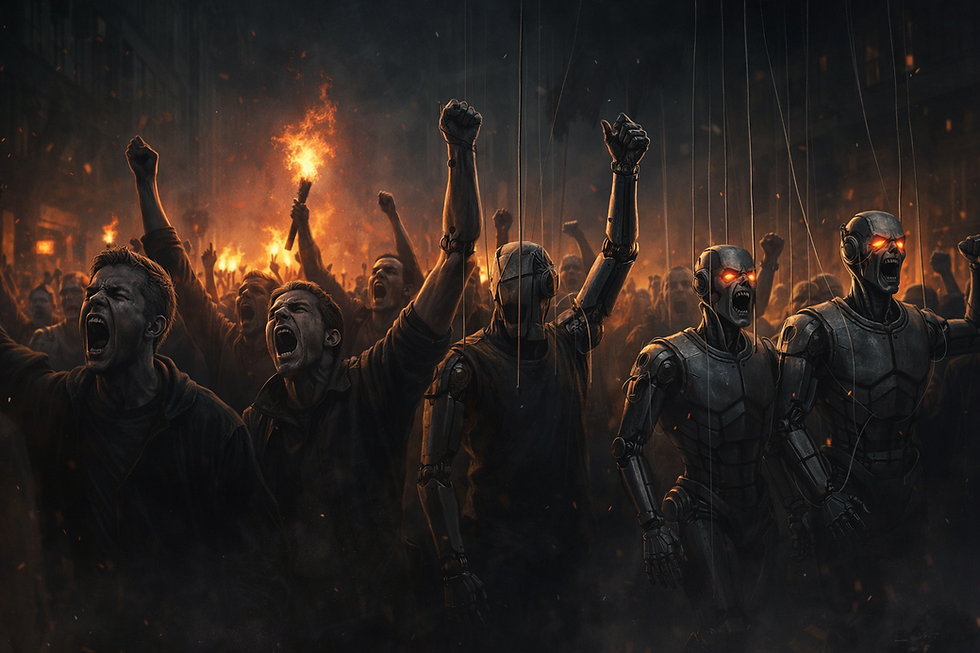
If the Calvinist is standing upon a worldview of EDD as a seeming majority of them do, this approach will eventually destroy the foundation upon which they stand. This is because, whether the EDD advocate realizes it or not, EDD tacitly assumes that our creator is a deity of deception.
We must reject this low view of God and instead presuppose perfect being theology!
Although we have good reason to conclude that God is a maximally great being (biblically and logically), presuppositional apologists (a.k.a., “presuppers”) — must not merely presuppose the reliability of scripture, the presupper must presuppose that the author of scripture is a perfect and maximally great being. I agree with the presupper that the existence of God is a necessary condition in order for humans to possess the ability to rationally infer and affirm claims of knowledge. In fact, J.P. Moreland and I have advanced an entire argument – the Free-Thinking Argument – concluding exactly what the presupper presupposes.
But why presuppose what one can logically conclude? That makes no sense.
The presupper needs to do more than merely presuppose the existence of God and a particular version of the Christian worldview in order to explain their rationality. They must specifically presuppose that God is a maximally great being. They must presuppose that God is an omnibenevolent “God of truth” (as James White says on page 39 of The God Who Justifies), and they must presuppose that God is anything but a “deity of deception” or a “god of mischief” who determines all of his committed followers to affirm and advance false beliefs about God and reality.
Ultimately, one must presuppose that (i) he or she possess intentional states of consciousness (the power to think of and about things, ideas, concepts, competing hypotheses, the laws of logic, and so forth), (ii) that the entirety of his or her mental states must not be causally determined by an untrustworthy something or someone other than the agent, and (iii) that he or she is an intelligently designed free-thinking "thing" -- created in the image and likeness of a maximally great being -- with cognitive faculties functioning properly (subject to no dysfunction) in an appropriate environment which can be aimed at truth, and hit the target of truth, if the agent is careful and handles his or her supernatural God-given powers responsibly.
As Spider-Man would say: "With great power comes great responsibility!"
If one presupposes EDD (as opposed to a maximally great being), then the presupper ultimately destroys the exact thing they are trying to explain – human rationality. This is the case because no one -- including all Christians and all Calvinists -- is infallible. Thus, if God determines all things, then this would include all of the false theological beliefs possessed by each and every Christ follower. If one presupposes that the Bible is reliable, but then interprets scripture in such a way that leads to the conclusion that the author of scripture is a deity of deception, then welcome to self-destruction.
Consider the deity of deception argument:
If EDD is true, then God determines all Christians to affirm some false theological beliefs.
If God determines all Christians to affirm some false theological beliefs, then God is deceptive, His Word (the Bible) cannot be trusted, and Christians cannot have assurance of salvation.
God is not deceptive, His Word can be trusted, and Christians can have assurance of salvation.
Therefore, God does not determine all Christians to affirm some false theological beliefs.
Therefore, EDD is false.
So, to answer the above questions asked by the transcendentalist/presuppositionalist: “What needs to be the case in order to make sense out of our human experience ?”
Answer: It must be true that a deity of deception does not determine all the deity's loyal followers to affirm false theological beliefs. Hence, unless the presuppositionalist wants to presuppose that God determines him or her to be theologically infallible, then the presupper must presuppose that they possess libertarian freedom and that EDD is false.
Bottom line: Presup + EDD = EPIC FAILURE! Combining these two ideas which are commonly both held by Calvinists reduces to "utter absurdity and an impossible reality" (as Pillows previously noted).
In conclusion, one cannot sensibly believe in both EDD and the TAG. If one advances the TAG, one must reject EDD. If one affirms EDD, he cannot consistently advance the TAG. If one tries to do both, he will inevitably shoot himself in the foot (or something much worse).
Stay reasonable (Isaiah 1:18),
Dr. Tim Stratton
Notes
Those in the know will notice that although this point is slightly different, it is heavily inspired by Alvin Plantinga’s description of when a belief has warrant (Knowledge and Christian Belief , 28, Logos). A special thanks is warranted to Tyler Dalton McNabb for recommending a conditional move (via personal correspondence, Aug 1, 2017).
See our journal article in Religions: A Special Edition, entitled, "An Explanation and Defense of the Free-Thinking Argument."
The mere fact that there exists a plethora of "Four Views" books debating different theological ideas is empirical evidence that mature Christian theologians are not infallible.
One might claim that this premise is false because a deity of deception requires the deity to be morally deficient; perhaps this deity has good reasons to deceive all Christians. As noted above, although I think this is unlikely, in this odd and ad hoc view, God could have morally sufficient reasons to be a deity of deception, but God would still be a deity of deception. No epistemic progress has been made since God could not be trusted to provide us with true theological beliefs.


Comments