
Praying for the Programmed
Updated: Nov 11, 2025
Under exhaustive divine determinism (EDD), man has no libertarian freedom, and all decisions human beings make are causally predetermined based on God's (causal) will. In other words, all decisions and actions of human beings are the result of God's immutable decree. And as we have seen, this means God forces (Calvin's word) all the actions of human beings and they cannot possibly do otherwise.
What does this do to prayer? We are all familiar with the common story of Christians praying for the salvation of their unsaved loved ones. But if God causally determines some to be saved and some to be lost, what is the point of praying for the unsaved? If God is going to program some people to be saved, and he has made that decision before any human beings ever existed, a prayer long after the fact of what God has decided for any given individual will be inconsequential.
The only way this could not be true is if God takes a "future" prayer he knows will be prayed into account "when" he makes the decision to save or destroy the potential believer. But what has just happened? An additional cause has been introduced into the formula. It's not just God's will alone that determines who is saved and who isn't. He has just been influenced by a prayer that God would save someone where he had decided to destroy them in the absence of that prayer. The prayer has changed his mind and has had an impact on the destiny of the one prayed for. Is this not an additional cause? If not, what is it? A prayer that someone would be saved has changed God's mind. Since, as we have seen multiple times, there can be no additional causes on top of God's will, the prayer cannot be a cause in this manner.
But there is an additional problem. If God's will is the sole determining cause of all things, then he causally determined the prayer from the concerned family member as well. Where does this take us?
It takes us here:
God decides in eternity past who is saved and who isn't.
God causally determines (also from eternity past) who would pray for someone to be saved.
That prayer alters God's prior decision to destroy the unsaved.
Now God's decision is to grant the request that he causally determined to take place.
The unsaved family member will now be saved because God has predestined that person to be saved because he causally determined that the concerned loved one would pray for them and that the prayer would change his mind.
What this amounts to is that God changed his mind because he causally determined that he would change his mind. In effect, he hasn't changed his mind at all. Why? Because he arranged all this ahead of time and there was no libertarian freedom involved in the prayer for the unsaved or the salvation of the "unsaved" person. Recall the analogy of the solitaire chess player.
God is playing himself in the game of salvation
. Nothing about the above scenario is caused by anything other than God's determining will. At the end of the day, the prayer on the part of the concerned Christian for the unsaved meant nothing. Why? Because God causally determined that prayer to be prayed, and this is no different from him causally determining someone to be saved or lost based on his own fiat. It's arbitrary fiat either way, which renders the prayer meaningless and a tragic waste of time. The concerned believer played no role in the final outcome of the unsaved-but-now-not-unsaved because God causally determined the concerned believer to pray that prayer. Again, everything has been arranged ahead of time. If the prayer of the concerned plays no role in the outcome, there is no reason to pray for the unsaved. We could say, "aha! But if the concerned believer didn't pray that prayer, the unsaved would remain lost, so there is a reason to pray that prayer." But think about what was just said: there is now a "reason" for the concerned Christian to do something? The concerned Christian can do nothing except what God causally determines them to do. So if he causally determined someone to pray for someone, either God will honor that prayer or he won't. But if he honors the prayer, he is only honoring himself, since he was the one who causally determined the prayer on the part of the (robot) concerned Christian. If he doesn't honor the prayer that he causally determined, that outcome was arranged ahead of time as well. This means it makes no difference whether anyone prays for anyone (or anything) at all. Either way, God causally determined the outcome as well as the prayer itself. If God is going to causally determine that someone pray for the unsaved, they'll pray for the unsaved, and their concern played no role in the matter. If their concern played no role, concern is irrelevant and meaningless. Now the only reason anyone would pray for the unsaved is if God causally determines that they do. If they pray for the unsaved, and God honors the prayer, the unsaved will be saved. But this was all causally determined ahead of time, which means, again, that no one prays for the unsaved out of concern. They only pray for the unsaved because God made them pray for the unsaved, which renders the prayer meaningless and irrelevant. We could say that God causes the concern, which in turn causes the prayer, which in turn causes God to "change his mind" and he saves the person after all. But did God really "change his mind?" No. He is determining everything, which means that the idea that God "changed his mind" is incoherent. He knew all along that he would reverse his prior decision to destroy the unsaved person, which means there was no reason to even decide on that destruction in the first place. The original posture that God changed his mind is meaningless and absurd. If God does not grant the request to save the unsaved, the prayer is rendered meaningless again. Remember that God causally determined all prayers for the unsaved. So God causally determined that someone pray for the unsaved and he decided that the prayer wouldn't change his mind, and now God will destroy the potential believer whether the other believer prayed for them or not. Again, the prayer was meaningless and inconsequential, and therefore not worth praying (as if they could ever do otherwise). Whether God saves anyone or not has nothing to do with whether we pray for them. If we pray for them, it means God causally determined that prayer, and therefore the prayer had nothing to do with the outcome. Under determinism, the entire concept of God deciding to change his own mind is absurd. There's no difference between changing his mind and not changing his mind, and what human beings do doesn't matter. If they are going to pray for the unsaved, it's only because God is making them pray for the unsaved, and if that prayer makes any difference, it's only because God is pulling the strings in every conceivable circumstance.
If the solitaire chess player "changes his mind" it doesn't change the fact that he is still playing himself, and the pieces are nothing more than mindless objects on a meaningless playing field
. It doesn't matter what they do on their own, indeed, they cannot do anything on their own. Years ago, I attended a prayer group in which one of the participants asked the group to pray for their self-control. Over the years I have thought about the concept of self-control, among other examples of the fruit of the Spirit. If God—in this case the Holy Spirit—unalterably determines all things, why does the concept of self-control even exist in the New Testament? If everything that happens is the result of the irresistible determination of God's will, we aren't in "control" of anything. There would be no such thing as "self" control. There would only be
divine
control—outside and in opposition to
self
. Self-control would be an oxymoron. Further, what the New Testament calls "self control" is really nothing more than
divine programming
, and the "self" is only executing its predetermined instruction code like a machine. Have you ever met a machine that had self-control? Neither have I. It can only mimic the attribute of self-control by running a program that makes it appear as though it is in control of its own movements. But this is nothing more than a machine operating according to its programming. It is incapable of doing anything else. If I commanded a machine to control itself, but programmed it to do what I wanted, it would be lunacy for me to scold it for doing what I programmed it to do and for not having self-control. Under divine determinism, it would be offensive to God to both pray for someone to have self-control and to even practice it. It would violate God's sovereignty to say, "I need to exercise self-control," when under determinism, God would respond, "how dare you even attempt to control yourself. You're going rogue and you're in defiance of how I alone have the right to control you."
If EDD-Calvinism is true, self-control would be a sin
. Have you ever prayed for God to help you be a better disciple? How about praying that God would help you love him more? Avoid that nagging sin? Stop being verbally abusive to others? There is an almost infinite number of things we ask God for—for ourselves, but for his sake. But if divine determinism is true, God is the one who determines the quality of our discipleship, how much (or whether) we love him, whether we commit the sins we don't want to commit, how we treat others. Does it make sense to pray for God to help me with anything?
If I'm struggling with sin, God is causing me to do so.
If I don't love him as I should, that's his doing. So when I pray for God to improve me, I'm actually saying he's not doing a good job of making me love him, avoid sin, and so on. I'm asking him to determine me to do something other than what he's determining me to do. How arrogant. And on top of it all, he is determining me to pray for him to not determine what he is determining—to determine something else. In other words, he is determining me to pray that his own will is
not
done. But this is where EDD-Calvinism takes us: we must defy God in order to have any hope of being a better disciple of God. We have to have the ability to resist what he determines in order to obey him. But if Calvinism is true, we have no such ability, and for that we are condemned, or "disciplined," or chastised because we did what God determined us to do and could not possibly have done otherwise.
In other words, even being one of the "elect" is a death sentence. It is impossible to please a deterministic God, for he is the one who is determining any shortcoming, any spiritual deficit, all of which prevent us from growing into spiritual maturity, which he expects of us, but which we cannot in any way live out because he has determined the opposite. At the present moment in time, I am less than what God in his revealed Word expects of me. Why am I less than that? Because since he determines all things about humanity, he has determined me to be less, which means he has determined that I fall short of what he expects of me. If I have any hope of being a better disciple, the only way that will happen is if he determines it. It has nothing to do with me, or my desire to be more like Jesus, or my longing to love him more completely, to follow him more closely. If that's the case, for me to pray for his help in making me a better man is vacuous nonsense. He's going to do with me whatever pleases him whether I pray or not. The ultimate conclusion this brings us to is that under EDD-Calvinism, Christian discipleship is nothing more than passive indifference. We simply sit here and wait for him to determine whatever he decides to determine.
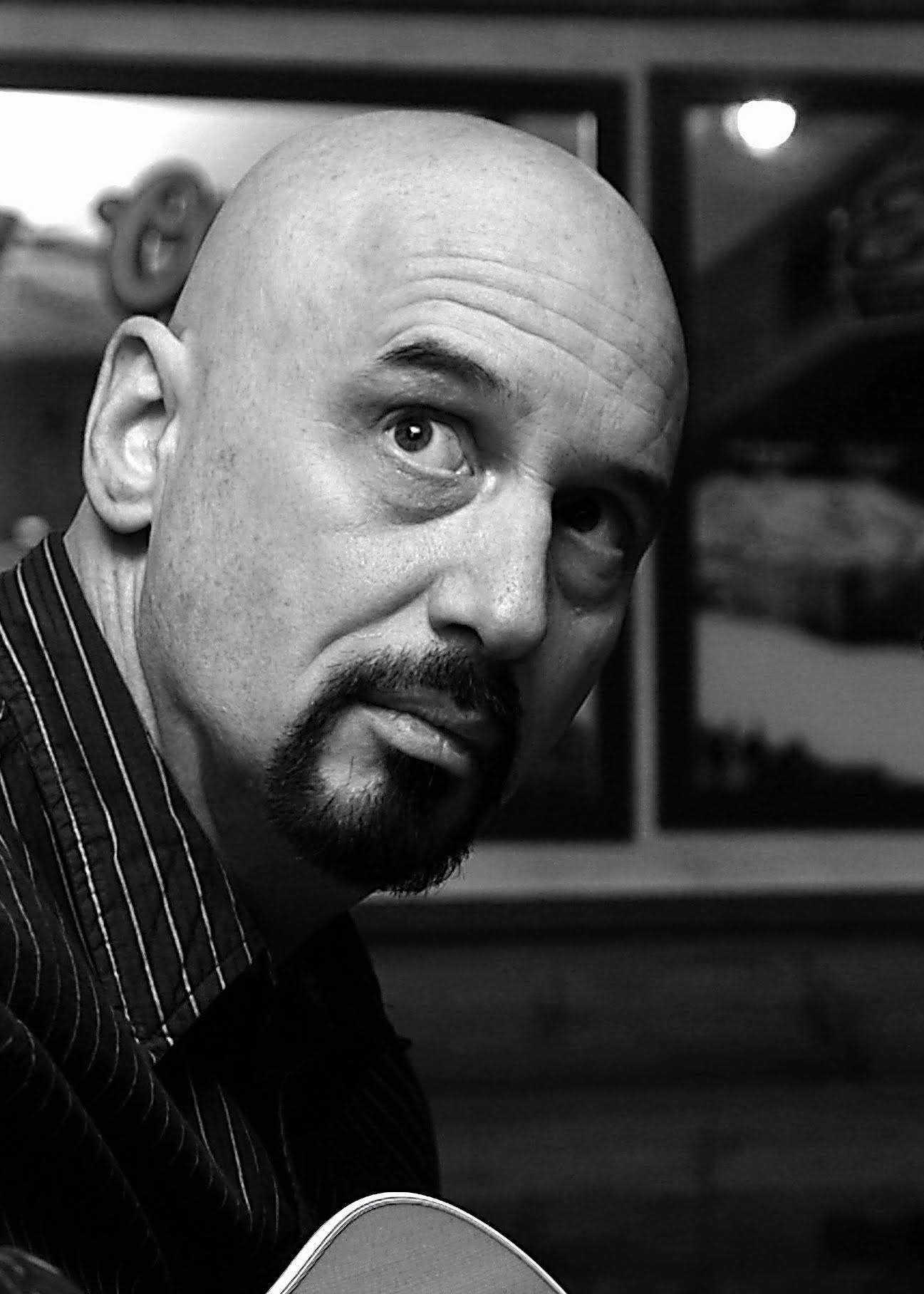
This passive waiting is exactly where Derek Webb ended up. He is the former lead singer for Caedman's Call, and now a former Christian. As a Calvinist, he saw what few Calvinists ever see. In his conversation with Matt Cook recorded and posted on YouTube, Webb pointed out:
Your own Bible says that it's a gift, it's a work of the Spirit start to finish, it's a removing of a heart of stone and replacing it with a heart of flesh. It's not something you can do for me. If it's true, we're both depending on the Spirit to show up. I'm literally in the grave next to Lazarus waiting to hear my name. And I'm going to lay in there dead until he shows up.
The tragedy here is that this is not what our "own Bible says." The Bible never says that the exercise of repentance and faith is identical to the resurrection of Lazarus. It doesn't even come close. Cook related the question, "what would it take for you to believe?" and Webb responded like this:
What it would take is a miracle. What does it take for a dead man to come out of the ground? It takes someone to dig him up, open the box, and revive him. And the Bible makes it very clear that there is nothing less than that going on in salvation. New life. From death to life. That's what would be required
The degree to which Webb is confused is quite common among the disciples of John Calvin, who routinely confused justification by faith with the regeneration and new life that follows as an implication and byproduct of that justification. But this is why it makes no logical sense for the Calvinist to pray for anything—not salvation, not healing, not spiritual growth, nothing.
Perhaps the most tragic comments of all are the ones that came next:
And I'm open to it. I'm literally in the grave waiting to hear my name. And I won't be able to resist it. I can't call out for it. I can't coax him over. Either my name is written in the book of life or it's not. And I got to the point where I thought "maybe God made me and fashioned me for destruction. Maybe it's all real and I'm just not chosen."
Webb may still not see the glaring contradiction in his narrative. He considers himself a non-believer, presumably to this day. But according to his own faulty Calvinist theology, non-believers like him are never "open to it." They're never open to anything related to God and the gospel. They are dead, remember? They hate God, and to say they would be "open to" being saved violates every Calvinist principle in every way imaginable. He goes on to say, "I'll make the best of this, and
I'm listening
." But back the truck up:
non-believers don't listen for God if Calvinism is true
. Webb went on to say Lazarus wasn't listening because "he was dead." So Webb is contradicting himself twenty five ways to Sunday. Does he realize that if he's listening, he can't be a dead unbeliever on Calvinism because that doesn't fit the profile? If Lazarus wasn't listening, Webb can't either. Yet he specifically tells us he is. At the end of the day, if Webb is listening, mainstream Calvinism is false. If Calvinist ideology is true, he's not listening. Webb can't have it both ways. This should not surprise us. Calvinism erodes intelligence and rationality to the point where even the attempt to de-convert on the basis of what is supposed to be rational is anything but. Former Calvinist believers like Webb have exchanged one set of irrational absurdities for another. Somewhere our enemy is laughing his head off.
I have heard Christians publicly state that they are praying for Webb to return to his former faith. I hope they aren't Calvinists. Because they don't have any business praying for anything.
I close this chapter with another sobering reality: if God determines all things, this must include human disease and suffering. As such, to pray for a loved one who has a horrible disease such as cancer is just as absurd as praying for someone to be saved or to have more self-control. God has determined the course of every disease, and he will determine the outcome regardless of our prayers. There can be no relationship between prayer and healing any more than between prayer and salvation. Everything I said about praying for the salvation of a loved one applies to praying for the healing of a loved one. There is no difference. This means it is pointless for anyone to pray for someone who has cancer. It is not compassion to do so, it is nothing more than deterministic mechanics. It has no meaning, no soul, no ultimate significance.
If Calvinism is true, why should I be grateful for anyone who prays for my daughter who has suffered from inflammatory cancer? God programmed them to pray for her just as he programmed her cancer. For Calvinists to pray for someone who is afflicted with cancer, or any other medical condition, is inconsistent at best, and the opposite of compassion at worst. God will determine what he decides to determine whether we pray or not. To every determinist who is either praying for someone who is suffering from grave medical conditions, or is asking for their own healing, or is asking for and grateful for anyone else praying for these things, my message to you is: don't bother, and don't pretend that prayer of this nature has any meaning or effect. It doesn't.
I doubt if I have to remind the reader that this blatantly defies the clear teaching of God's Word:
The prayer of a righteous man is powerful and effective. (James 5:16)
Calvinism's deterministic ideology is, once again, virulently hostile to scripture, compassion, and reason.


Comments